

Japanese Conversation · Level 37
90 words
Search Japanese words as written, in romaji or by English meaning.
Dictionaries
Quick links
Browse
 MotiSpiOfficial conversation app

Japanese word
Romajiyureru
地震で家が揺れます。ji shin de ie ga yu re ma su
The house shakes during an earthquake.
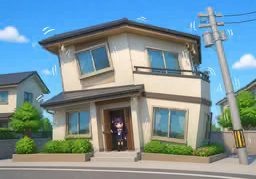
風で木の葉が揺れます。kaze de ko no ha ga yu re ma su
The leaves sway in the wind.
この椅子は座ると少し揺れます。ko no i su wa suwa ru to suko shi yu re ma su
This chair shakes a little when you sit on it.
Expresses repeated movement around a position, such as side-to-side motion caused by wind, an earthquake, or another force.
前後に揺れるzen go ni yu re ru
rock back and forth
左右に揺れるsa yū ni yu re ru
sway from side to side
小さく揺れるchii sa ku yu re ru
shake slightly
震えるfurueru: To move with quick, small repeated motions because of cold, fear, or weakness.
ぐらつくguratsuku: To move unsteadily from side to side because of unstable balance or support.
揺らぐyuragu: To move gently from side to side or become less stable.
物や場所が、地震や風などの力によって前後左右に動く。mono ya ba sho ga ji shin ya kaze na do no chikara ni yo tte zen go sa yū ni ugo ku
揺れる (yureru) is a native Japanese verb related to 揺る (yuru, "to shake"), with its form showing that the subject undergoes the motion instead of causing it.