

Japanese Conversation · Level 37
90 words
Search Japanese words as written, in romaji or by English meaning.
Dictionaries
Quick links
Browse
 MotiSpiOfficial conversation app

Japanese word
Romajimochimono
私の持ち物はこのかばんに入っています。watashi no mo chi mono wa ko no ka ba n ni hai tte i ma su
My belongings are in this bag.
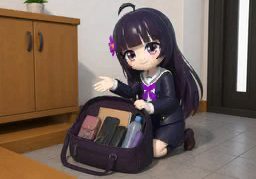
学校へ行く前に持ち物を準備します。gak kō e i ku mae ni mo chi mono o jun bi shi ma su
I prepare my belongings before going to school.
学校へ行く前に、必要な持ち物をそろえます。gak kō e i ku mae ni hitsu yō na mo chi mono o so ro e ma su
Before going to school, I gather the belongings I need.
It refers to the collection of things that belong to a person, especially those carried or kept nearby.
持ち物をそろえるmo chi mono o so ro e ru
gather one's belongings
持ち物に名前を書くmo chi mono ni na mae o ka ku
write one's name on one's belongings
持ち物を忘れるmo chi mono o wasu re ru
forget one's belongings
所持品shojihin: Personal items that someone has in their possession, often in a formal context.
私物shibutsu: Items owned by an individual rather than by a group, school, or workplace.
身の回り品minomawarihin: Personal items used or kept in daily life.
ある人が持っている私有の品物。a ru hito ga mo tte i ru shi yū no shina mono
持ち物 (mochimono) is formed from 持ち (mochi, "holding"), the continuative form of 持つ (motsu, "to hold or have"), and 物 (mono, "thing").