

Japanese Conversation · Level 120
60 words
Search Japanese words as written, in romaji or by English meaning.
Dictionaries
Quick links
Browse
 MotiSpiOfficial conversation app

Japanese word
Romajikyakkanteki
彼の意見は客観的です。kare no i ken wa kyak kan teki de su
His opinion is objective.
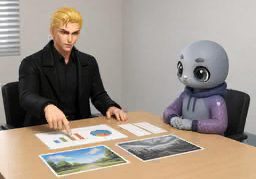
会議では、感情を交えず客観的に事実を伝えます。kai gi de wa kan jō o maji e zu kyak kan teki ni ji jitsu o tsuta e ma su
In meetings, I report the facts objectively without letting emotions affect me.
Describes judging or presenting something from a standpoint separate from personal feelings or interests.
客観的な意見kyak kan teki na i ken
an objective opinion
客観的に見るkyak kan teki ni mi ru
view objectively
客観的な判断kyak kan teki na han dan
an objective judgment
中立的chūritsuteki: Neutral and not aligned with any particular side or interest.
公平kōhei: Fair and free from favoritism when judging people or situations.
冷静reisei: Calm and not controlled by strong emotions.
個人の感情や立場に偏らず、第三者の立場から物事を公平に判断するさま。ko jin no kan jō ya tachi ba ni katayo ra zu dai san sha no tachi ba ka ra mono goto o kō hei ni han dan su ru sa ma
客観的 (kyakkanteki, "objective") is a Sino-Japanese compound of 客観 (kyakkan, "view from outside") and 的 (teki, "having the nature of"). 客観 consists of 客 (kyaku, "outsider") and 観 (kan, "view").