

Japanese Conversation · Level 70
75 words
Search Japanese words as written, in romaji or by English meaning.
Dictionaries
Quick links
Browse
 MotiSpiOfficial conversation app

Japanese word
Romajiiyagaru
子どもは薬を嫌がります。ko do mo wa kusuri o iya ga ri ma su
The child dislikes medicine.
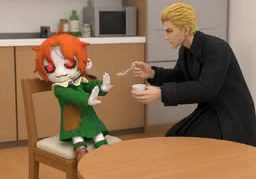
彼女は知らない人と話すのを嫌がります。kano jo wa shi ra na i hito to hana su no o iya ga ri ma su
She dislikes talking with strangers.
Shows that someone regards something negatively and does not willingly accept or do it.
注射を嫌がるchū sha o iya ga ru
dislike injections
人前で話すのを嫌がるhito mae de hana su no o iya ga ru
be reluctant to speak in public
嫌うkirau: To have a strong dislike of someone or something.
渋るshiburu: To show reluctance to agree, act, or take part.
拒むkobamu: To say or show that something will not be accepted or done.
避けるsakeru: To deliberately stay away from someone or something.
不快に思い、進んで受け入れようとしない。fu kai ni omo i susu n de u ke i re yō to shi na i
The verb 嫌がる (iyagaru) is formed from 嫌 (iya, "unpleasant") and がる (garu), a suffix for an outwardly expressed feeling.