

Japanese Conversation · Level 134
61 words
Search Japanese words as written, in romaji or by English meaning.
Dictionaries
Quick links
Browse
 MotiSpiOfficial conversation app

Japanese word
Romajiōmisoka
大晦日にそばを食べます。ōmisoka ni so ba o ta be ma su
I eat soba on New Year's Eve.
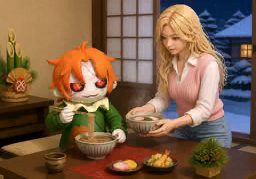
大晦日は家族でそばを食べます。ōmisoka wa ka zoku de so ba o ta be ma su
On New Year's Eve, my family eats soba together.
大晦日になると、紅白歌合戦の話題がよく出ます。ōmisoka ni na ru to kō haku ka kas sen no wa dai ga yo ku de ma su
When New Year's Eve arrives, the Kohaku Uta Gassen song contest often comes up in conversation.
大晦日 (ōmisoka) marks the final day of the year, when one year reaches its boundary before the next begins.
大晦日を過ごすōmisoka o su go su
spend New Year's Eve
大晦日に年越しをするōmisoka ni toshi ko shi o su ru
see in the New Year on New Year's Eve
大晦日を祝うōmisoka o iwa u
celebrate New Year's Eve
大晦日を迎えるōmisoka o muka e ru
welcome New Year's Eve
除夜joya: The nighttime period on December 31 that leads into the new year.
一年の最後の日で、十二月三十一日。ichi nen no sai go no hi de jū ni gatsu san jū ichi nichi
大晦日 (ōmisoka) combines 大 (ō, "great") with 晦日 (misoka, "the last day of a month"); 晦日 comes from 三十日 (misoka, "thirtieth day").