

Japanese Conversation · Level 44
90 words
Search Japanese words as written, in romaji or by English meaning.
Dictionaries
Quick links
Browse
 MotiSpiOfficial conversation app

Japanese word
Romajiyūgure
夕暮れになると、町の明かりが一つずつつきます。yū gu re ni na ru to machi no a ka ri ga hito tsu zu tsu tsu ki ma su
At dusk, the town lights come on one by one.
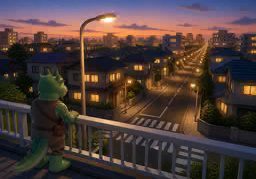
夕暮れには、鳥の声が少しずつ静かになります。yū gu re ni wa tori no koe ga suko shi zu tsu shizu ka ni na ri ma su
At dusk, the birds gradually grow quiet.
Describes the period when daylight fades and night begins, focusing on the changing light rather than a precise clock time.
夕暮れにyū gu re ni
at dusk
夕暮れの空yū gu re no sora
dusk sky
黄昏tasogare: A literary term for the time when daylight fades and night begins.
暮れ方kuregata: The time as daylight comes to an end, especially near sunset.
夕方yūgata: The later part of the day, from late afternoon through sunset.
日暮れhigure: The time when daylight ends and darkness begins.
日が沈み、明るさが失われて夜になるまでの時間帯。hi ga shizu mi aka ru sa ga ushina wa re te yoru ni na ru ma de no ji kan tai
夕暮れ (yūgure) combines 夕 (yū, "evening") with 暮れ (gure, "the end of daylight"), the noun form related to 暮れる (kureru, "to grow dark").