

JLPT · Level 156
15 words
Search Japanese words as written, in romaji or by English meaning.
Dictionaries
Quick links
Browse
 MotiSpiOfficial conversation app

Japanese word
Romajiteibō
この堤防は町を洪水から守ります。ko no tei bō wa machi o kō zui ka ra mamo ri ma su
This levee protects the town from floods.
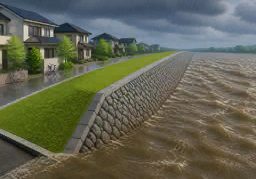
市は洪水に備えて、古い堤防を補強しました。shi wa kō zui ni sona e te furu i tei bō o ho kyō shi ma shi ta
The city reinforced the old levee in preparation for floods.
Refers to a built-up strip of earth or stone that holds back floodwater and protects land near a river or coast.
堤防が決壊するtei bō ga kek kai su ru
a levee gives way
堤防を築くtei bō o kizu ku
build a levee
堤防を補強するtei bō o ho kyō su ru
reinforce a levee
堤tsutsumi: A raised barrier that holds back water and may be built along a river, lake, or coast.
土手dote: A raised bank beside a river, usually made of earth and used to contain water.
洪水や高潮を防ぐため、川や海岸に沿って設ける土や石の構造物。kō zui ya taka shio o fuse gu ta me kawa ya kai gan ni so tte mō ke ru tsuchi ya ishi no kō zō butsu
The compound 堤防 (teibō) joins 堤 (tei, "embankment") with 防 (bō, "to prevent"), directly reflecting its role in holding back water.