

Japanese Conversation · Level 71
75 words
Search Japanese words as written, in romaji or by English meaning.
Dictionaries
Quick links
Browse
 MotiSpiOfficial conversation app

Japanese word
Romajimiyage
京都で土産を買います。kyō to de miyage o ka i ma su
I buy a souvenir in Kyoto.
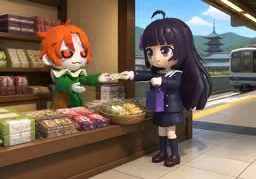
旅行から帰る前に、友達への土産を選びます。ryo kō ka ra kae ru mae ni tomo dachi e no miyage o era bi ma su
Before returning from my trip, I choose a souvenir for my friend.
Refers to something brought back from a place as a keepsake or a local product.
土産を買うmiyage o ka u
buy a souvenir
土産を選ぶmiyage o era bu
choose a souvenir
土産を渡すmiyage o wata su
give a souvenir
手土産temiyage: A gift taken when visiting someone or going to a social occasion.
名産品meisanhin: A product especially associated with and produced in a particular place.
記念品kinenhin: An object kept as a reminder of a place, event, or experience.
旅行先や訪問先から持ち帰る記念の品や、その土地で作られた名物の品。ryo kō saki ya hō mon saki ka ra mo chi kae ru ki nen no shina ya so no to chi de tsuku ra re ta mei butsu no shina
土産 (miyage) is a native Japanese word written with 土 (do, "earth") and 産 (san, "produce"); the kanji point to a product of the land, while the exact origin of the reading is uncertain.