

Japanese Conversation · Level 126
60 words
Search Japanese words as written, in romaji or by English meaning.
Dictionaries
Quick links
Browse
 MotiSpiOfficial conversation app

Japanese word
Romajitonaeru
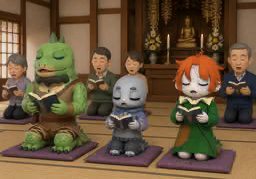
みんなで声を合わせてお経を唱えます。mi n na de koe o a wa se te o kyō o tona e ma su
We chant sutras together.
先生のあとに続いて、短い詩を唱えます。sen sei no a to ni tsuzu i te mijika i shi o tona e ma su
The children recite a short poem after the teacher.
To say fixed words aloud with a steady rhythm, especially when several people speak them together or use them in worship.
お経を唱えるo kyō o tona e ru
chant sutras
呪文を唱えるju mon o tona e ru
chant a spell
声を合わせて唱えるkoe o a wa se te tona e ru
chant in unison
詠唱するeishōsuru: To recite words in a set rhythm, often as part of a religious practice.
暗唱するanshōsuru: To say a passage aloud from memory without looking at the text.
唱和するshōwasuru: To say words aloud together in response to a leader or another group.
朗誦するrōshōsuru: To recite written words aloud in a clear, expressive voice.
一定の文句や経文を、節をつけたり声をそろえたりして言う。it tei no mon ku ya kyō mon o fushi o tsu ke ta ri koe o so ro e ta ri shi te yū
唱える (tonaeru, "to chant") is a native Japanese verb that developed from the older form 唱ふ (tonafu, "to chant"), which meant saying words aloud.