

Japanese Conversation · Level 59
75 words
Search Japanese words as written, in romaji or by English meaning.
Dictionaries
Quick links
Browse
 MotiSpiOfficial conversation app

Japanese word
Romajifukikomu
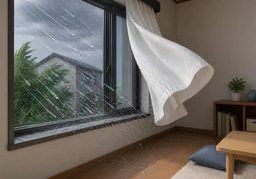
雨が開いた窓から吹き込みます。ame ga hira i ta mado ka ra fu ki ko mi ma su
Rain blows in through the open window.
父は火を強くするため、炭火に息を吹き込みます。chichi wa hi o tsuyo ku su ru ta me sumi bi ni iki o fu ki ko mi ma su
My father blows into the charcoal fire to make it burn hotter.
It describes air or weather moving forcefully from outside into a space, often through an opening.
隙間から吹き込むsuki ma ka ra fu ki ko mu
blow in through a gap
家の中に吹き込むie no naka ni fu ki ko mu
blow into the house
空気をタイヤに吹き込むkū ki o ta i ya ni fu ki ko mu
blow air into the tire
吹き入るfukiiru: To come into a space when wind passes through an opening.
風や雨などが外から中へ勢いよく入り込む。kaze ya ame na do ga soto ka ra naka e ikio i yo ku hai ri ko mu
吹き込む (fukikomu) combines 吹く (fuku, "to blow") in its connective form with 込む (komu, "to enter deeply"), giving the sense of blowing into a space.