

Japanese Conversation · Level 45
90 words
Search Japanese words as written, in romaji or by English meaning.
Dictionaries
Quick links
Browse
 MotiSpiOfficial conversation app

Japanese word
Romajizengo
いすを前後に動かします。i su o zen go ni ugo ka shi ma su
I move the chair back and forth.
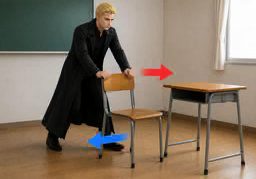
ブランコが前後に揺れています。bu ra n ko ga zen go ni yu re te i ma su
The swing is rocking back and forth.
Marks the two sides or directions on either side of a reference point, allowing it to describe movement between them or positions and times before and after it.
前後に揺れるzen go ni yu re ru
rock back and forth
前後に動かすzen go ni ugo ka su
move back and forth
前後に動くzen go ni ugo ku
move back and forth
往復ōfuku: Movement from one place to another and back again.
行き来ikiki: Movement between two places, people, or positions in both directions.
基準となる位置や時点をはさんだ、前と後ろの両側やその間。ki jun to na ru i chi ya ji ten o ha sa n da mae to ushi ro no ryō gawa ya so no aida
前後 (zengo, "before and after; front and back") is a compound of 前 (zen, "front; before") and 後 (go, "back; after"), using their Sino-Japanese readings.