

JLPT · Level 110
30 words
Search Japanese words as written, in romaji or by English meaning.
Dictionaries
Quick links
Browse
 MotiSpiOfficial conversation app

Japanese word
Romajidekoboko
この道は凸凹が多いです。ko no michi wa deko boko ga ō i de su
This road has many bumps.
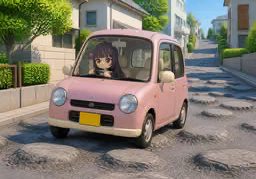
この道は凸凹が多くて歩きにくいです。ko no michi wa deko boko ga ō ku te aru ki ni ku i de su
This path is very bumpy and hard to walk on.
壁の凸凹を手で確かめます。kabe no deko boko o te de tashi ka me ma su
I check the bumps on the wall with my hand.
Presents something as having noticeable highs and lows instead of a uniformly flat or even form.
凸凹が激しいdeko boko ga hage shi i
be very bumpy
凸凹を直すdeko boko o nao su
fix the bumps
道の凸凹michi no deko boko
road bumps
起伏kifuku: A series of rises and dips in land or on a surface.
段差dansa: A step or change in level between two adjoining surfaces.
高低差kōteisa: The difference in height between a high point and a low point.
表面に出っ張りやくぼみが多く、平らでないこと。hyō men ni de ppa ri ya ku bo mi ga ō ku tai ra de na i ko to
凸凹 (dekoboko) is formed from 凸 (deko, "convex") and 凹 (boko, "concave"), whose paired shapes directly suggest repeated rises and depressions.