

Japanese Conversation · Level 100
60 words
Search Japanese words as written, in romaji or by English meaning.
Dictionaries
Quick links
Browse
 MotiSpiOfficial conversation app

Japanese word
Romajisonaeru
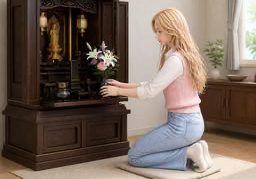
仏壇に花を供えます。butsu dan ni hana o sona e ma su
I offer flowers at the family altar.
毎朝、神棚に水を供えます。mai asa kami dana ni mizu o sona e ma su
Every morning, I offer water at the household shrine.
Places something before a deity, a memorial, or another sacred focus as an offering rather than as an ordinary gift.
仏壇に供えるbutsu dan ni sona e ru
offer at a family altar
墓前に供えるbo zen ni sona e ru
offer at a grave
神棚に供えるkami dana ni sona e ru
offer at a household shrine
花を供えるhana o sona e ru
offer flowers
捧げるsasageru: To present something as an offering to a deity or another respected recipient.
奉納するhōnōsuru: To dedicate an object to a shrine or temple as a formal religious offering.
手向けるtamukeru: To present flowers, food, or other items to a deity or the dead.
神仏や死者などにささげるため、花や食べ物などをその前に置く。shin butsu ya shi sha na do ni sa sa ge ru ta me hana ya ta be mono na do o so no mae ni o ku
供える (sonaeru) is the modern form of the classical verb 供ふ (sonafu), a native Japanese verb meaning "to offer or provide"; its modern ending reflects a historical change in verb conjugation.