

Japanese for Kids · Level 15
90 words
Search Japanese words as written, in romaji or by English meaning.
Dictionaries
Quick links
Browse
 MotiSpiOfficial conversation app

Japanese word
Romajitsukisou
姉が学校まで付き添います。ane ga gak kō ma de tsu ki so i ma su
My older sister accompanies me to school.
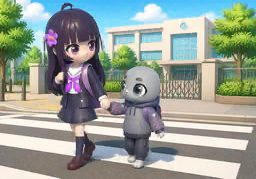
帰り道は、妹が一人にならないよう私が付き添いました。kae ri michi wa imōto ga hito ri ni na ra na i yō watashi ga tsu ki so i ma shi ta
I accompanied my younger sister on the way home so she would not be alone.
It centers on staying beside someone while going with them, often to provide support or protection.
最後まで付き添うsai go ma de tsu ki so u
stay with someone until the end
妹に付き添うimōto ni tsu ki so u
accompany one's younger sister
同行するdōkōsuru: To go with someone to a place as part of the same trip.
同伴するdōhansuru: To go with someone, often to an event or appointment.
人のそばにいて、行動をともにする。hito no so ba ni i te kō dō o to mo ni su ru
The compound verb 付き添う (tsukisō) combines 付く (tsuku, "to attach") and 添う (sō, "to stay alongside").