

Japanese Conversation · Level 4
86 words
Search Japanese words as written, in romaji or by English meaning.
Dictionaries
Quick links
Browse
 MotiSpiOfficial conversation app

Japanese word
Romajimonsutā
そのモンスターはとても大きいです。so no mo n su tā wa to te mo ō ki i de su
That monster is very large.
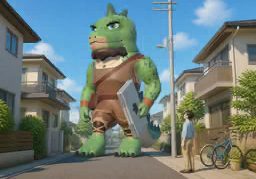
ゲームの中で、主人公は巨大なモンスターから村を守ります。gē mu no naka de shu jin kō wa kyo dai na mo n su tā ka ra mura o mamo ri ma su
In the game, the hero protects the village from a giant monster.
Presents a being or thing as so unnatural, powerful, or threatening that it exceeds ordinary human limits.
モンスター映画mo n su tā ei ga
monster movie
モンスターを倒すmo n su tā o tao su
defeat a monster
怪物kaibutsu: An extraordinary being whose form or abilities exceed ordinary human limits.
化け物bakemono: An abnormal being or thing treated as frightening because of its grotesque form.
魔物mamono: A supernatural creature that possesses dangerous or evil magical power.
普通の生き物とはかけ離れた姿や力を持ち、人に恐れを抱かせる生き物。また、性質や規模が極端なもの。fu tsū no i ki mono to wa ka ke hana re ta sugata ya chikara o mo chi hito ni oso re o ida ka se ru i ki mono ma ta sei shitsu ya ki bo ga kyoku tan na mo no
The noun モンスター (monsutā, "monster") is borrowed from English monster, which comes through French from Latin monstrum, meaning "omen" or "portent."