

JLPT · Level 13
75 words
Search Japanese words as written, in romaji or by English meaning.
Dictionaries
Quick links
Browse
 MotiSpiOfficial conversation app

Japanese word
Romajiōbākōto
寒い日はオーバーコートを着ます。samu i hi wa ō bā kō to o ki ma su
I wear an overcoat on cold days.
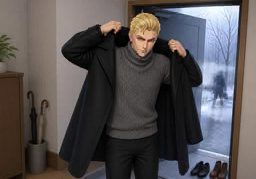
室内に入る前にオーバーコートを脱ぎます。shitsu nai ni hai ru mae ni ō bā kō to o nu gi ma su
I take off my overcoat before entering the building.
Conveys the idea of adding a protective coat on top of the clothes already being worn.
オーバーコートを着るō bā kō to o ki ru
wear an overcoat
オーバーコートを脱ぐō bā kō to o nu gu
take off an overcoat
オーバーコートを羽織るō bā kō to o ha o ru
put on an overcoat
コートkōto: An outer garment worn over clothes for warmth or protection from rain and cold.
外套gaitō: A traditional term for an outer garment worn over clothing in cold weather.
衣服の上に着て寒さを防ぐ、厚手で丈の長い外衣。i fuku no ue ni ki te samu sa o fuse gu atsu de de take no naga i gai i
The loanword オーバーコート (ōbākōto) follows English overcoat, a compound of over, "on top of," and coat, "a garment worn on the body."