

JLPT · Level 44
45 words
Search Japanese words as written, in romaji or by English meaning.
Dictionaries
Quick links
Browse
 MotiSpiOfficial conversation app

Japanese word
Romajihitorideni
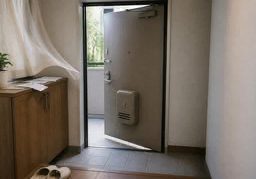
ドアがひとりでに開きます。do a ga hi to ri de ni hira ki ma su
The door opens by itself.
古い時計の針が夜中にひとりでに動きました。furu i tokei no hari ga yo naka ni hi to ri de ni ugo ki ma shi ta
The hands of the old clock moved by themselves in the middle of the night.
Presents an event as arising without a visible agent, whether through natural change or automatic operation.
ひとりでに開くhi to ri de ni hira ku
open by itself
ひとりでに動くhi to ri de ni ugo ku
move by itself
ひとりでに止まるhi to ri de ni to ma ru
stop by itself
ひとりでに消えるhi to ri de ni ki e ru
disappear by itself
自然とshizento: An event develops or occurs without deliberate human action.
勝手にkatteni: An event occurs without being directed or controlled by a person, often contrary to intention.
おのずとonozuto: A result follows from the situation without direct effort or control.
他から力を加えたり手を加えたりしなくても、物事が自然に起こるさま。hoka ka ra chikara o kuwa e ta ri te o kuwa e ta ri shi na ku te mo mono goto ga shi zen ni o ko ru sa ma
ひとりでに (hitori de ni) is built from ひとり (hitori, "alone"), で (de, "in a state"), and に (ni, an adverbial particle), so the phrase denotes something happening in an unassisted state.