

Japanese Conversation · Level 28
90 words
Search Japanese words as written, in romaji or by English meaning.
Dictionaries
Quick links
Browse
 MotiSpiOfficial conversation app

Japanese word
Romajihashagu
子どもたちは遠足ではしゃぎました。ko do mo ta chi wa en soku de ha sha gi ma shi ta
The children got excited on the field trip.
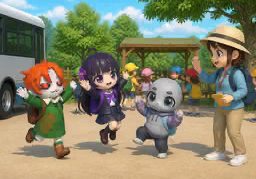
休日には、子どもたちが公園ではしゃいでいます。kyū jitsu ni wa ko do mo ta chi ga kō en de ha sha i de i ma su
On holidays, the children are frolicking in the park.
Describes becoming so openly lively and excited that one's behavior turns playful and energetic.
友達とはしゃぐtomo dachi to ha sha gu
have fun with friends
声を上げてはしゃぐkoe o a ge te ha sha gu
frolic noisily
興奮するkōfunsuru: To enter a state of strong excitement that can arise from many causes.
浮かれるukareru: To become carried away by pleasure and behave with lighthearted excitement.
騒ぐsawagu: To make a noisy disturbance through excited or disorderly behavior.
気分が浮き浮きして、騒いだりふざけたりする。ki bun ga u ki u ki shi te sawa i da ri fu za ke ta ri su ru
はしゃぐ (hashagu) is a native Japanese verb traditionally written 燥ぐ (hashagu, "to dry"), and it also developed an established sense of becoming lively and excited.