

Japanese Conversation · Level 30
90 words
Search Japanese words as written, in romaji or by English meaning.
Dictionaries
Quick links
Browse
 MotiSpiOfficial conversation app

Japanese word
Romajisōshite
手を洗います。そうして、ご飯を食べます。te o ara i ma su sō shi te go han o ta be ma su
I wash my hands. Then I eat.
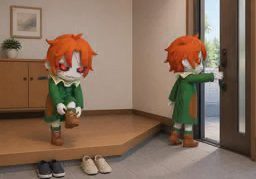
窓を開けました。そうして、部屋に新しい風が入りました。mado o a ke ma shi ta sō shi te heya ni atara shi i kaze ga hai ri ma shi ta
I opened the window, and then fresh air came into the room.
そうして (sōshite) connects a preceding act with what comes after it or with what is done by that act.
そうしてからsō shi te ka ra
after that
そしてsoshite: It links one action or event to the next in a sequence.
それからsorekara: It introduces the action or event that follows an earlier one.
するとsuruto: It introduces an event that happens as a result of a preceding action or situation.
前の事柄のあとに続く動作や事柄を示す語。mae no koto gara no a to ni tsuzu ku dō sa ya koto gara o shime su go
The expression そうして (sōshite) consists of そう (sō, "that way") and して (shite, "doing"), the connective form of する (suru, "do").