

Japanese Conversation · Level 1
86 words
Search Japanese words as written, in romaji or by English meaning.
Dictionaries
Quick links
Browse
 MotiSpiOfficial conversation app

Japanese word
Romajisayōnara
友だちにさようならと言います。tomo da chi ni sa yō na ra to i i ma su
I say goodbye to my friend.
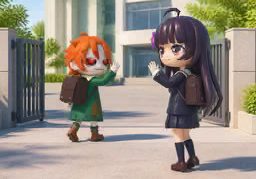
帰る前にさようならと言います。kae ru mae ni sa yō na ra to i i ma su
I say goodbye before I leave.
授業が終わったら、先生にさようならと言います。ju gyō ga o wa tta ra sen sei ni sa yō na ra to i i ma su
When class is over, I say goodbye to my teacher.
Expresses the closing of an interaction as the speaker and listener go their separate ways.
さようなら、また明日sa yō na ra ma ta asu
Goodbye, see you tomorrow
またねmatane: A friendly farewell for people who are likely to meet again.
じゃあねjāne: An informal farewell used when someone leaves or a conversation ends.
バイバイbaibai: An informal farewell with a playful tone, especially common among children.
会話や面会を終えて立ち去るときに相手へ告げる言葉。kai wa ya men kai o o e te ta chi sa ru to ki ni ai te e tsu ge ru koto ba
The interjection さようなら (sayōnara) is a shortened form of さようならば (sayōnaraba), an expression meaning "if that is so" that came to mark a parting.