

Japanese Conversation · Level 56
75 words
Search Japanese words as written, in romaji or by English meaning.
Dictionaries
Quick links
Browse
 MotiSpiOfficial conversation app

Japanese word
Romajisakanoboru
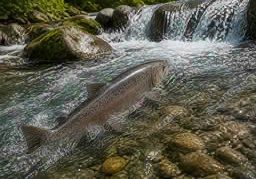
魚が川をさかのぼります。sakana ga kawa o sa ka no bo ri ma su
The fish go upstream in the river.
調査隊は川をさかのぼって、源流を目指します。chō sa tai wa kawa o sa ka no bo tte gen ryū o me za shi ma su
The research team goes upstream along the river toward its source.
Marks a return along a path toward where something began, whether the path is a river, a timeline, or a chain of events.
川をさかのぼるkawa o sa ka no bo ru
go upstream along the river
源流までさかのぼるgen ryū ma de sa ka no bo ru
go upstream to the source
流れに逆らってさかのぼるnaga re ni saka ra tte sa ka no bo ru
go upstream against the current
上るnoboru: To travel upstream along a river or stream.
戻るmodoru: To move back toward a point that was passed earlier.
たどるtadoru: To follow a route or sequence toward its source or an earlier point.
川などの流れに逆らって上流へ進む。また、過去の時点や物事の始まりへ向かって戻る。kawa na do no naga re ni saka ra tte jō ryū e susu mu ma ta ka ko no ji ten ya mono goto no haji ma ri e mu ka tte modo ru
The Japanese verb さかのぼる (sakanoboru) comes from the native elements 逆 (saka, "reverse") and 上る (noboru, "go up"), which give it the sense of going upward against a flow.