

Japanese Conversation · Level 5
87 words
Search Japanese words as written, in romaji or by English meaning.
Dictionaries
Quick links
Browse
 MotiSpiOfficial conversation app

Japanese word
Romajikaeru
池にかえるがいます。ike ni ka e ru ga i ma su
There is a frog in the pond.
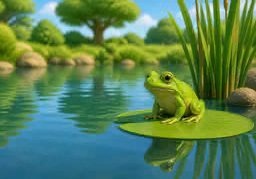
庭にかえるがいます。niwa ni ka e ru ga i ma su
There is a frog in the yard.
子どもが小さなかえるを観察しています。ko do mo ga chii sa na ka e ru o kan satsu shi te i ma su
A child is observing a small frog.
Describes a small amphibian that lives in or near water and is known for jumping and croaking.
かえるを捕まえるka e ru o tsuka ma e ru
catch a frog
かえるの卵ka e ru no tamago
frog eggs
かえるの鳴き声ka e ru no na ki goe
the sound of frogs
池や沼などにすみ、跳ねたり鳴いたりする両生類。ike ya numa na do ni su mi ha ne ta ri na i ta ri su ru ryō sei rui
The noun かえる (kaeru, "frog") is a native Japanese word, commonly written 蛙 (kaeru, "frog"), rather than a loanword.