

Japanese for Kids · Level 1
84 words
Search Japanese words as written, in romaji or by English meaning.
Dictionaries
Quick links
Browse
 MotiSpiOfficial conversation app

Japanese word
Romajiatode
あとで先生に聞きます。a to de sen sei ni ki ki ma su
I will ask the teacher later.
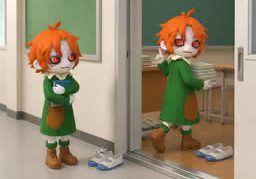
この本はあとで読むために、机の上に置いておきます。ko no hon wa a to de yo mu ta me ni tsukue no ue ni o i te o ki ma su
I will leave this book on my desk so I can read it later.
It places an action after the present moment or another stated time without fixing exactly when it will happen.
あとで読むa to de yo mu
read later
後ほどnochihodo: At a later time, usually soon, and often in polite speech.
そのうちsonouchi: At some unspecified time in the future, often without a firm plan.
いずれizure: At some future time, with the exact time left unstated.
今より後の時に。ima yo ri ato no toki ni
The adverb あとで (atode) combines あと (ato, "after, later") with the particle で (de), marking the time when something happens.