

German Conversation · Level 2
87 words
Search German words by spelling or English meaning.
Dictionaries
Quick links
Browse
 MotiSpiOfficial conversation app

German word
IPA/klaʊ̯n/
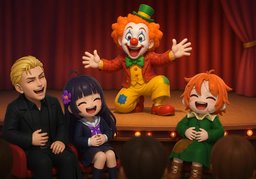
Der Clown bringt die Kinder zum Lachen.
The clown makes the children laugh.
Auf der Party verkleidete er sich als Clown.
At the party, he dressed up as a clown.
A brightly made-up performer turns exaggerated gestures, pantomime, and pratfalls into laughter.
als Clown auftreten
perform as a clown
sich als Clown verkleiden
dress up as a clown
einen Clown engagieren
hire a clown
Komiker: A stage entertainer who mainly gets laughs through words and comic timing.
Komödiant: An actor or entertainer who delights audiences through comic performance.
Pantomime: A performer who conveys scenes and feelings silently through gestures and movement.
Artist: A circus performer who amazes audiences with acrobatics and physical skills.
Komikerische Bühnenfigur, meist mit markanter Schminke und Kostüm, deren Aufgabe es ist, durch Spiel, Pantomime oder Tollpatschigkeit zu unterhalten.
German Clown is borrowed from English clown, which is recorded in Middle English as clowne, while the word's deeper origin remains uncertain.